


Your Store Is Just a Storage Unit

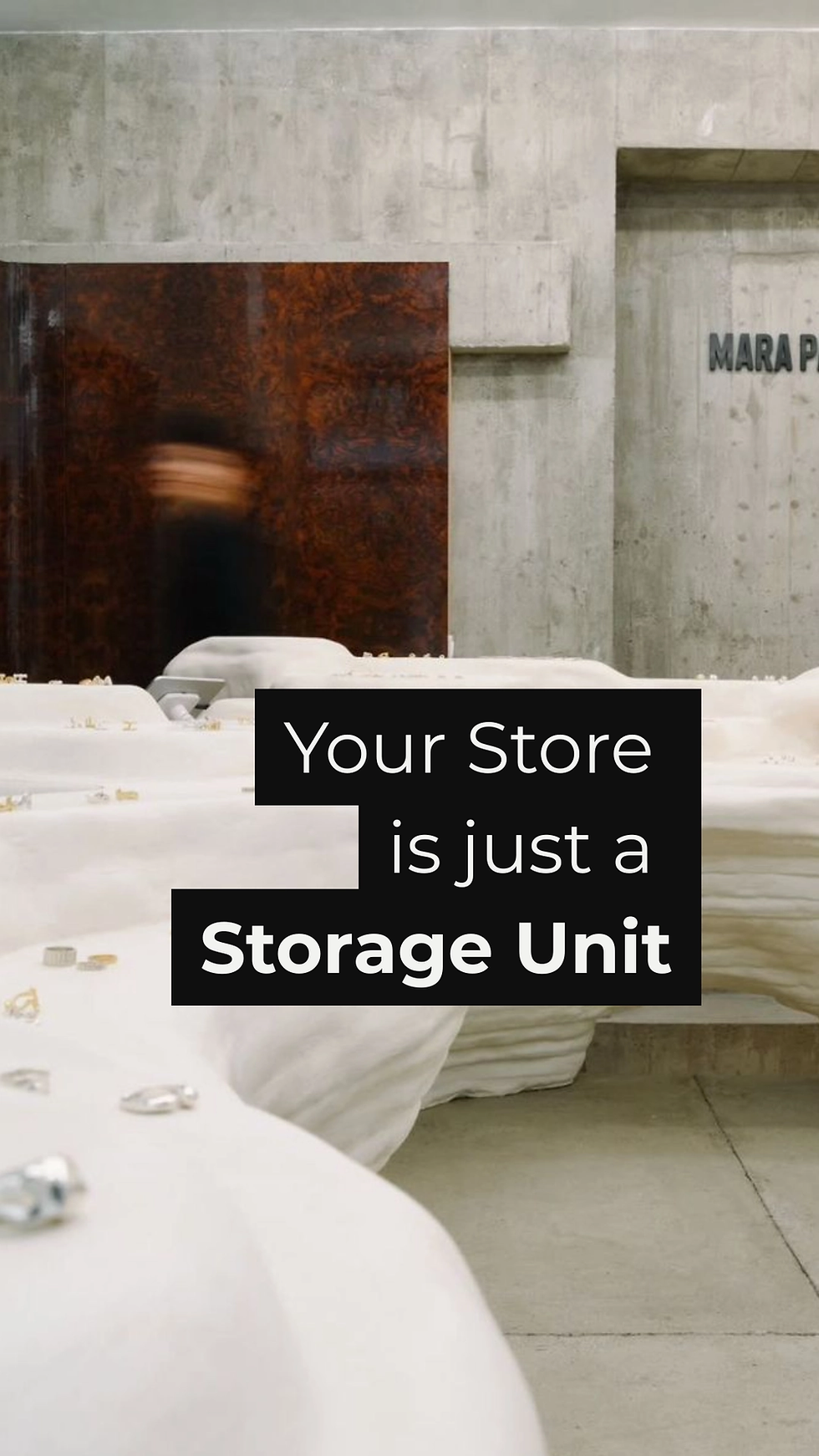
Most retailers make the same mistake before they open the doors.
They spend months selecting the right materials, the right shelving, the right lighting temperature. They brief the architect on brand guidelines. They approve the render, sign off on the fit-out, and wait for the cash register to ring.
Then they wonder why foot traffic doesn't convert.
The problem isn't the product. It isn't the location. It isn't even the price point.
It's the floor plan.
A store designed for inventory is a liability
Walk into most physical retail spaces and you'll notice the same logic at work: shelves positioned to maximize display surface, aisles laid out to guide people past as much product as possible, the checkout placed where it's operationally convenient.
This is product-centric design. It optimizes for inventory, not for the person browsing it.
The result is a space that creates friction. Customers feel the pressure of the layout before they consciously register it. The pace feels wrong. The transitions feel abrupt. They move through quickly, touch little, and leave without buying — or without coming back.
A physical space is not a container. It's a machine. Either it converts foot traffic into brand loyalty, or it quietly works against you.
The psychology behind spatial performance
Research into retail dwell time consistently shows a direct correlation between time spent in a space and transaction value. According to data from Pathintelligence, even marginal gains in dwell time track to measurable increases in sales per visit.
But dwell time isn't a metric you can chase directly. You can't install a longer aisle and expect people to linger. Dwell time is a byproduct — an outcome of getting the spatial psychology right.
Three principles drive it:
1. Decompress the entrance.
The first ten feet of a retail environment are functionally useless for selling. Customers arriving from the street are still mentally outside. They're transitioning — adjusting to the light, the temperature, the shift in pace. Placing merchandise immediately at the threshold creates friction they can't articulate but will absolutely feel.
A decompression zone removes that friction. It gives them a moment to arrive, and it signals — without a word — that this space was designed with them in mind.
2. Engineer strategic friction.
Counter-intuitively, you don't want customers moving efficiently through your space. A clear, straight path from entrance to checkout is the retail equivalent of a fast-food drive-through. It is operationally legible, and commercially destructive.
Curved pathways, deliberate lighting contrasts, and material transitions slow the pace. They create moments of discovery. They turn a transaction into an experience.
This isn't decorative. It's engineered behavior.
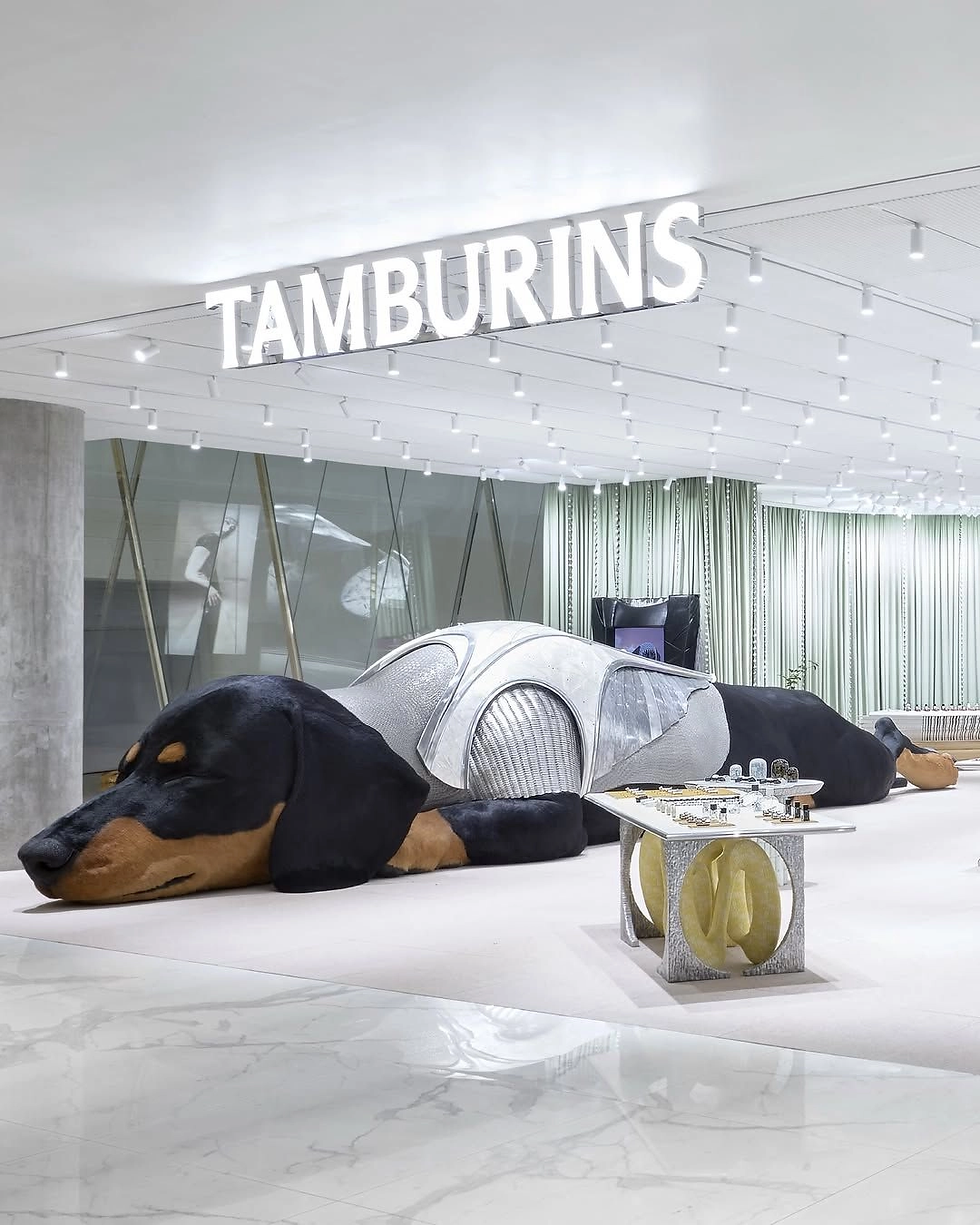
3. Make operations invisible.
Nothing breaks the illusion of a premium environment faster than a staff member restocking shelves in the middle of a curated display zone. Or a returns process that happens in full view of a client.
The back-of-house and front-of-house have to be designed as separate systems. Utilitarian operations and experiential zones should never intersect in the customer's sightline. Keeping them separated is not an aesthetic choice — it's a brand decision.
Aesthetics without psychology is a vanity metric
A beautiful store that doesn't convert is expensive to operate and impossible to defend to a board of investors.
At SMN Design, we engineer retail environments around the client, not the inventory. Every floor plan decision — from the decompression zone to the placement of the last fixture — is made with the customer journey in mind, not the storage requirement.
The work we do for brands entering physical retail or scaling across markets is built on this logic: the space has to perform. It has to justify the CapEx. It has to work as hard as the product it houses.
If it doesn't, you haven't built a store. You've built an expensive storage unit.
Interested in redesigning your physical retail experience? Visit smndesign.net or send INFO in DM to explore how we can support your next project.


Comments